Part I. General Matters
Overview of NEUST history, mission, campuses and student principles
A. Historical Background
The Nueva Ecija University of Science and Technology (NEUST) started in June, 1908 as Wright Institute in San Isidro, Nueva Ecija, offering vocation course where residents of the provinces were trained in woodworking and basic telegraphy. Said vocational courses were offered up to SY 1927-1928 until such time that the school started to offer secondary education. On June 9, 1929. the name of the school was changed to Nueva Ecija Trade School (NETS) with woodworking as the vocational course being offered.
To meet the increasing demand for vocational education in the whole province, the trade school was transferred to Cabanatuan City on June 7, 1931. Enrolment increased; however, the program was interrupted in December, 1941 due to the outbreak of the Second World War in the Pacific.
Immediately after the war, the trade school was reopened on September 6, 1945. Rehabilitation program took place. The trade school continued with its mission of meeting the vocational and manpower needs of students coming from both Nueva Ecija and the nearby provinces. On June 8, 1948, a course in dressmaking was opened and female students were admitted in the School. A few years later, food trades and cosmetology courses were also offered.
On May 8, 1953, the NETS was converted into Central Luzon School of Arts and Trades (CLSAT) by virtue of Republic Act No. 845. CLSAT was recognized as a center of manpower/vocational training for both youths and adults not only in the province but also in the Region III.
Series of developments continued until the CLSAT was converted into the Central Luzon Polytechnic College (CLPC) by virtue of Republic Act No. 3998 which was signed on June 18, 1964 by then President Diosdado Macapagal.
After thirty-four years, CLPC under the leadership of President Gemiliano C. Calling was converted into a specialized university which is now known as the Nueva Ecija University of Science and Technology (NEUST) by virtue of Republic Act. No 8612. Said Republic Act was signed on February 19, 1998 by then House Speaker Jose de Venecia and lapsed into law on March 27, 1998 during the administration of President Fidel V. Ramos. Thereafter, the University ensures that the business industries, services and other sectors in the country are provided with high quality professionals and highly skilled middle-level manpower.
The leadership of Dr. Calling as the first University President ended up when he died on July 5, 2006. The baton of leadership was turned over to Atty. Hilario C. Ortiz as Acting President until he was formally sworn into office on August 5, 2007 as the Second University President. President Ortiz administration was marked by quality education, intensified research program, comprehensive extension services, massive infrastructure development, expanded international linkages and networking, and intensive income generating pragrams that sustained the needs of the growing population.
On August 4, 2011, Atty. Hilario C. Ortiz, was again given another four year term as University President until his retirement on August 4, 2015. Immediately thereafter, the CHED appointed Engr. Ernesto A. Dela Cruz, then Vice President for Administration, Business and Finance, as Officer-in-Charge, Office of the University President. He performed the functions of his Office efficiently and with much enthusiasm. Among the achievements of NEUST during his short stint as OIC were the following: The putting up of a Land Bank Automated Teller Machine within the NEUST premises at Gen. Tinio Street Campus for the sake, safety and convenience of the University personnel; the benefits of personnel accruing from the University CNA; the appointment of some new faculty members of non-teaching personnel.
Currently, Dr. Feliciana P. Jacoba serves as the third University President of NEUST, having assumed the position on February 10, 2016, succeeding Atty. Ortiz upon his retirement. Notably, she stands as the youngest and first woman president in the university's history, adding a significant milestone to her accomplished career.
Some of the most notable accomplishments of President Jacoba's administration include the following:
Global University Rankings. Confirming its global quality, NEUST joined the world's top universities listed in the Times Higher Education (THE) Impact Ranking as well as the Quacquarelli Symonds (QS) University World Rankings.
Institutional and Program Accreditation. NEUST is a top state university in the country with Level III Institutional Accreditation. In 2021, it was recognized as the Top Performing SUC with 22 Level III Accredited Programs. In 2020, it was the Top 3 Performing SUCs with 13 Level I Accredited Programs, according to AACCUP, Inc.
ISO and ISA. It was also during the time of President Jacoba that the university secured ISO 9001:2015 certification and recertification. In addition, the University also subjected itself to CHED's Institutional Sustainability Assessment (ISA).
On Instruction. During the time of President Jacoba, instruction has been strengthened and enhanced to further deliver high-quality education that meets the needs and interests of the students and the industry. Notably, all undergraduate programs offered at the University have a Certificate of Program Compliance from the Commission on Higher Education. With this, over 29,000 students, including indigenous peoples (IPs), have attended NEUST campuses to date, not only from Nueva Ecija but also from neighboring provinces. In addition, the performance of NEUST graduates in board licensure examinations has also seen a remarkable increase during the Jacoba administration.
On Research. Since 2016, the University has already produced 703 internationally published research papers and 992 citations. It has also obtained external research funding amounting to P159,003,211.25. The University has allocated sufficient funds for internally funded research, some of which have been utilized by the community in the form of operations and livelihood development. Furthermore, NEUST has established research centers and other centers of learning and development to enhance the programs and projects of the University and cater to both the academic sector and the community. The centers include the Metal Innovation Center, the Center for Indigenous Peoples' Education, the Center for Environmental Research, the Onion and Garlic Research and Development Center, the Technology Business Incubation (NEUST-TBI), Community Learning Resource Centers (CLRC), and the Pasalubong Center in Gabaldon Campus.
On Extension Services. NEUST has actively engaged in extension services, offering seminars, conferences, technical assistance, and various training programs in different areas. During the pandemic, the university provided essential items like personal protective equipment (PPE), face shields, masks, gloves, alcohol, hand soap, food packs, financial aid, and transportation assistance to affected sectors. Despite challenges, NEUST staff adhered to health regulations, enabling the university to continue its core functions. Furthermore, NEUST's facilities served as a quarantine center/community isolation unit under Resolution No. 48, s. 2020, through a Memorandum of Agreement with the Nueva Ecija Provincial Government.
International and Domestic Institutional Linkages. Recognizing the importance of linkages, NEUST continues to establish local, national, and international partnerships under President Jacoba's leadership, expanding its capacity to serve students, the community, and the world more effectively. On internationalization, NEUST has established partnerships with international institutions, engaging in faculty-student exchange programs, research collaborations, and academic/cultural resource sharing to align with global standards through its participation in SEAMEO programs, Peace Corps Philippines, and other ASEAN collaborations.
Awards and Recognitions. Under President Jacoba's leadership, NEUST has garnered prestigious awards and recognitions, showcasing the university's outstanding contributions across various fields. Key accolades include: CHED ICONS Awards in 2023 for its performance in the world university rankings and as a finalist in the Outstanding International Education Program category. In 2022, the university was recognized with the Best Practice during the Pandemic Award for its innovative approach to learning during the pandemic; NEUST has consistently excelled in ADSE, achieving 11 national finalists, three national championships (2023, 2020, and 2018), and one ASEAN Regional winner (1st runner-up); Freedom of Information (FOI) Award in 2020 for NEUST's commitment to transparency and accountability as a higher education institution; Recognition from the Civil Service Commission Region III for NEUST's excellent performance in efficient and effective public service under the PRIME-HRM; and outstanding recognitions from different agencies including Nueva Ecija Police Provincial Office, Philippine Red Cross-Nueva Ecija Chapter, and the Department of Education Schools Divisions of Nueva Ecija and Cabanatuan City. The university has also received numerous local and international accolades for its achievements in cultural, literary, sports, and journalism competitions, as well as excellence in instruction, research, extension, and production.
On Infrastructure and Digitalization. Under President Jacoba's effective leadership, NEUST has implemented the Board-approved LUDIP to construct various physical facilities across its campuses, reflecting the University's commitment to strategic planning and efficient coordination. Additionally, NEUST has embraced digitalization to adapt to evolving academic needs, including the establishment of the Technology Hub and Robotics Building at Sumacab Campus, the introduction of online admission and enrollment processes, online/ hybrid classes, and digital library services, among other advancements.
Commendable Agency Performance Review. NEUST has earned commendations from the Department of Budget and Management (DBM) for exemplary financial management and operations. This success is attributed to the harmonious collaboration among administrators and support staff. The positive evaluations have led to NEUST receiving performance-based bonuses (PBB) consistently for the past 12 years.
In conclusion, President Jacoba, alongside the Administrative Council, faculty, staff, and the dedicated community, has tirelessly worked towards developing programs, initiatives, and activities that embody a commitment to delivering quality education and upholding academic excellence aligned with the institution's mission and vision.
B. Vision
The University envisions to be a locally responsive and internationally relevant and recognized University of Science and Technology.
C. Mission.
To develop new knowledge and technologies and transform human resources into productive citizenry to bring about development impact to local and international communities.
D. University Tagline
"Transforming Communities through Science and Technology"
E. Core Values
Nationalism
Excellence
Unity
Spirituality
Transparency
Maintainer's Note
The images of the different campuses are sourced from the official NEUST website and other sources. They are not the exact images used in the printed version of the 2023 Student Handbook.
F. Campuses
Operating in eight campuses, namely: the Gen. Tinio Campus, Sumacab Campus, San Isidro Campus, Fort Magsaysay Campus, Atate Campus, Gabaldon Campus, Nampicuan Campus and Sto. Domingo Campus, the University has continuously taken the lead towards accessible quality education.
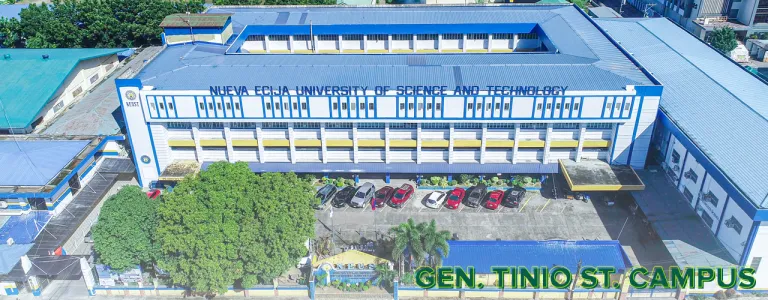
The Gen. Tinio Campus of the University sits on a 1.93-hectare lot along General Tinio Street in the heart of Cabanatuan City. It is about 120 kilometers north of Manila and about one hour travel away from the university's most distant campus, the Gabaldon Campus.
The Gen. Tinio Campus houses the Graduate School, College of Industrial Technology, College of Arts and Sciences, College of Nursing, Dona Asuncion G. Romulo Memorial Hall (DAGRHM), Office of Student Affairs and Services, Administration Building and Laboratory High School Department.
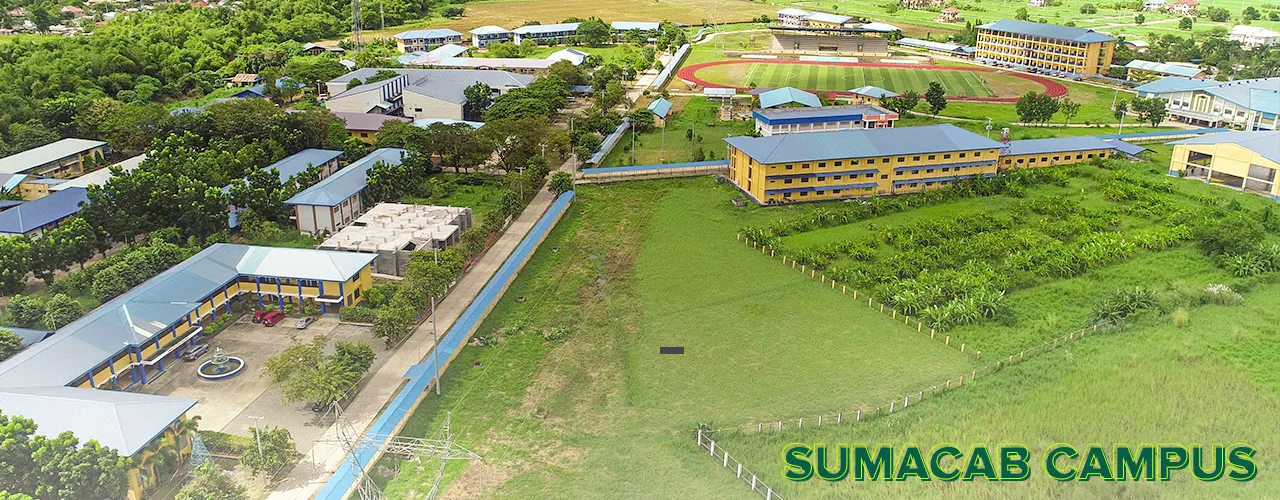
On the other hand, Sumacab Campus sits on a 23.9-hectare lot that strattegically lies on Sumacab Este, Cabanatuan City. Relatively expansive, Sumacab Campus is free from the hustle and bustle of the city. Sumacab Campus is only around two kilometers away from the town of Sta. Rosa. The campus houses the College of Architecture, College of Education, College of Management and Business Technology, College of Information and Communications Technology, College Engineering, College of Criminology, College of Public Administration and Disaster Management and Graduate school. Other physical facilities situated in the Campus are the Guest House, NSTP Building, Alumni Center, NEUST Hostel, University Museum, Rock Garden, Heroes Park, Administration Building, Library, Infirmary, Farmers' Training Center, Physical Fitness Center, Amphitheater, Open and Closed Gymnasiums, the Techno Hub, Oval, Child-Minding Center, Metal Innovation Center, Ortiz Hall, Quality Assurance Office, Mini Convention Center, University Chapel, University Dormitory, Office of Student Affairs and Services and Metal Casting Center.
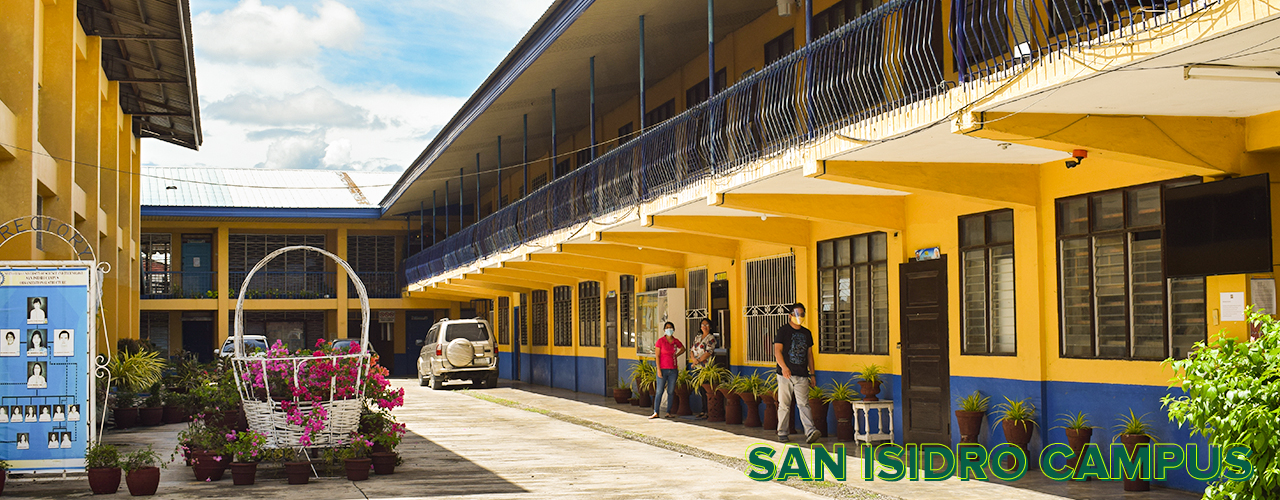
San Isidro Campus, the eldest of the eight campuses is situated in a .55 hectare lot in San Isidro Nueva Ecija. It is only an hour travel away from the busy City of San Fernando, Pampanga. The Campus offers Bachelor of Secondary Education, Bachelor of Science in Industrial Education.

The Fort Magsaysay Campus is situated in an 8.5 hectare lot in a military community in Palayan City. It servesd as NEUST's catch basin in the southeastern part of the province. The campus often offers first two years of courses in Bachelor of Science in Information and Communications Technology, Secondary Education, Business Administration and Trade Secondary Curriculum.
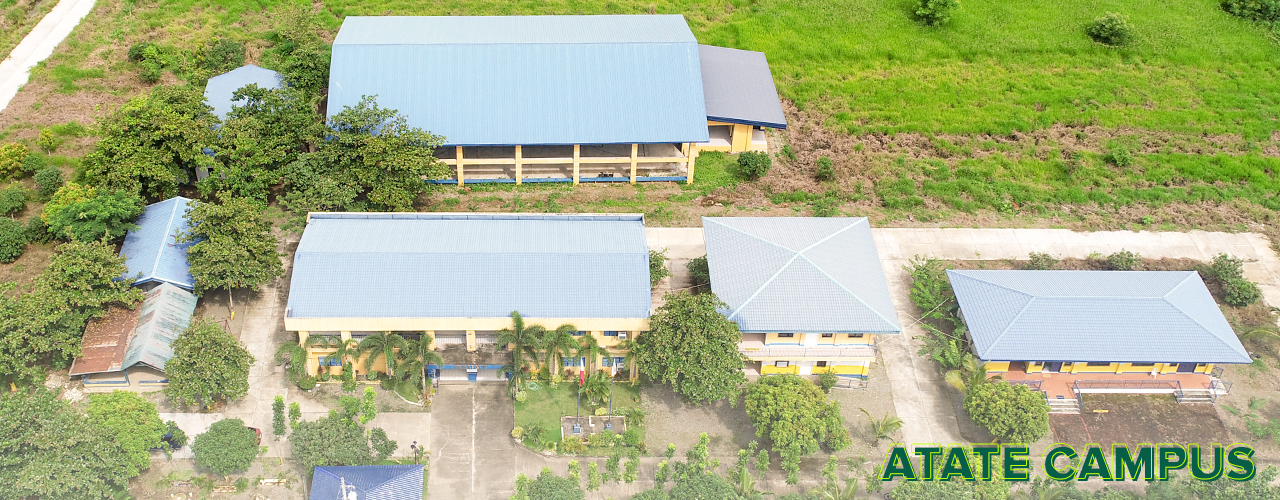
The Atate Campus is a 4.4 hectare-lot situated in Atate, Palayan City. The campus serves as the university's link to the southeastern part of Nueva Ecija. The Campus offers first two years of Bachelor of Science in Information and Communications Technology, Business Administration, and Education.
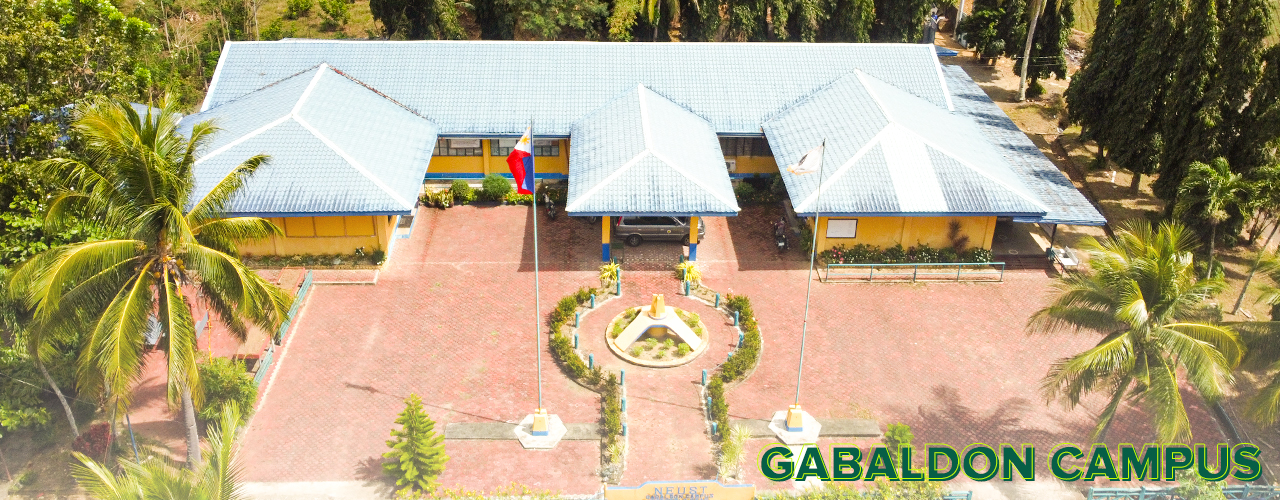
The Gabaldon Campus is located in a sprawling 278 hectare land that lies along the foot of Mt. Mingan in the Sierra Madre Mountain Ranges on the eastern side of the municipality of Gabaldon, Nueva Ecija. It is the gateway of the province to the town of Dingalan. The Campus offers courses such as Bachelor of Science in Agriculture, Ladderized Bachelor of Science in Information and Communications Technology, Bachelor of Secondary Education, Bachelor of Elementary Education, Associate in Food Technology, and University Agricultural, Science and Technology Secondary School Curriculum, and Secondary Trade Curriculum.
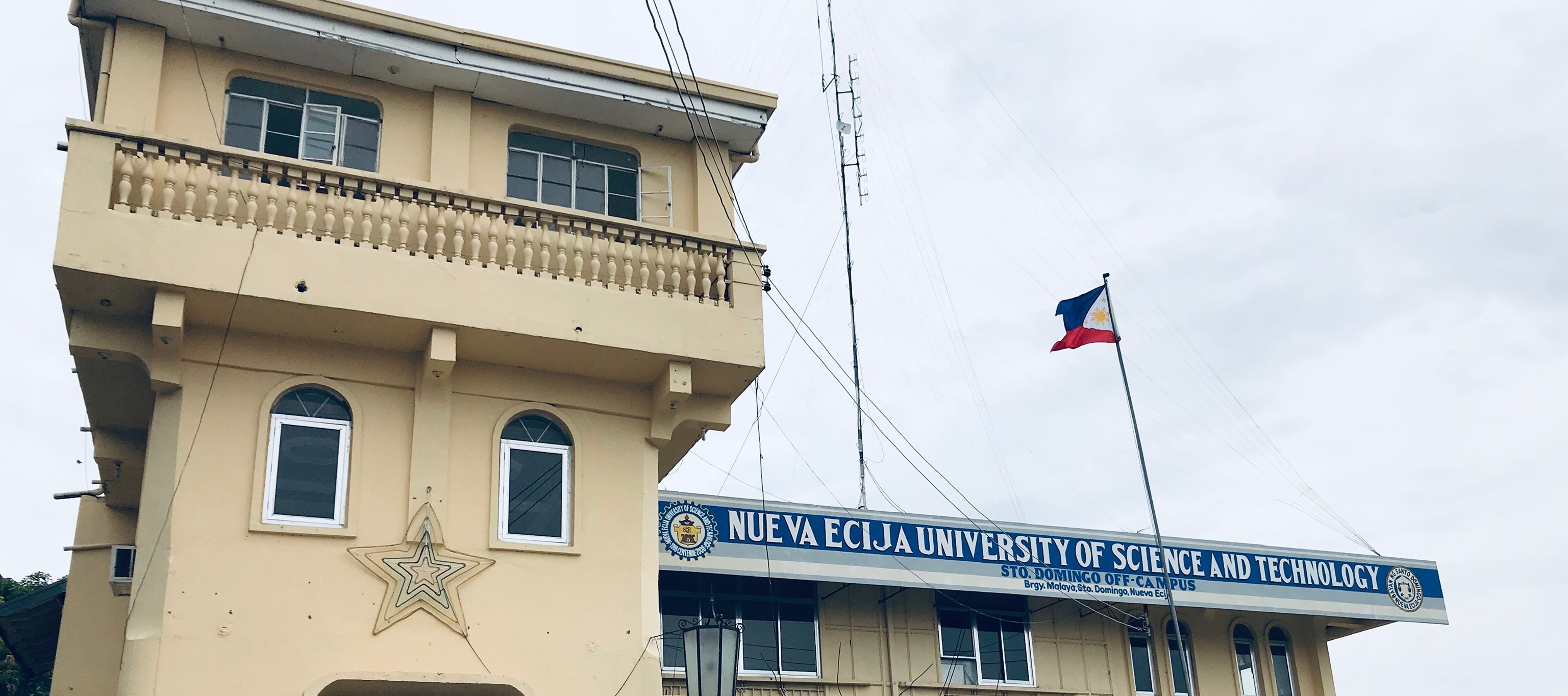
The NEUST-Sto. Domingo Campus (RA No. 11752) and Nampicuan Campus (RA No. 11753) shall primarily provide short- term, technical-vocational, undergraduate, and graduate courses within its areas of competency and specialization, pursuant to its mandate, and according to its capabilities as the Board of Regents, hereinafter referred to as the Board, may deem necessary to carry out its objectives, and those which respond to the human resources development needs of the Province of Nueva Ecija and Region III.
The NEUST-Sto. Domingo and Nampicuan Campuses are also mandated to undertake research and extension services, and to provide progressive leadership in these areas.
In response to the call of reaching the youth in all parts of the province to acquire quality, affordable yet comparable education, NEUST has forged linkages with many local govemment units in Nueva Ecija for the establishment of academic extension campuses. Making education available to every doorstep, the Ortiz Administration really proved that NEUST is a strong bridge that tied and linked students to their future.
The Talavera, Carranglan, Nampicuan and Sto. Domingo comprise the North Off Campuses while San Leonardo, Penaranda, San Antonio and Papaya comprise the South Off Campuses.
G. Philosophical Statement on Students
The Nueva Ecija University of Science and Technology recognizes that the studentry is the central figure of all educational efforts and programs. Within the context of shared accountabilities, his active and cooperative involvement in all these development efforts is vital to his self-realization and in attainment of institutional goals. Hence, the need to mobilize the NEUST's efforts through dynamic, academic and administrative mechanism for developing him into well-rounded and productive individual in the region in particular, and of the nation in general. Concomitant to these education efforts is his commitment to and acceptance of responsibilities to share in the establishment of harmonious environment in which educational objectives can be effectively attained.
Source: CLPC Student Manual, 1990.
H. Declaration of Principles
- The University recognizes the vital role of the youth in nation building and shall promote and protect their physical, moral, spiritual, intellectual and social well-being.
- The University shall respect the inherent individual and collective rights of student subject to limitations as provided by the law, public policy and acceptable customs and traditions.
- The University shall protect and promote the rights to quality education of all students and take appropriate measures to make such education accessible to all.
- No student shall be discriminated by virtue of his birth, sex, religion, socio-economic status and political beliefs and aspirations.
- Students shall be guaranteed participation and initiative in matters affecting their well-being.
- All students shall uphold the academic integrity of their institution and shall conduct themselves in accordance with the established rules and regulations of their institution and acceptable mores of society.
I. Student's Rights and Obligations
The following rights under the New Philippine Constitution and the Education Act of 1982 shall be guaranteed to every bona fide student of the University:
-
Rights under the New Constitution:
- The right to life, liberty and property under due pracess of law,
- The right to equal protection of the law;
- The right against unreasonable search and seizures and illegal arrest;
- The right to privacy of communication and correspondence;
- The freedom of speech and expression;
- The right to peaceably assemble and petition the lawful authorities for redress of grievances;
- The right to free exercise and enjoyment of religious profession and worship;
- The liberty of abode and the right to travel;
- The right to public information;
- The right to form organization or associations;
- The right to free-access of the court and quasi-judicial bodies and adequate legal assistance;
- All rights of the accused as provided for under pertinent sections of the Bill of Rights;
- The rights against arbitrary detention;
- The right to effective and reasonable participation.
- The right to academic freedom within the limitation as provided by law;
- The right to suffrage;
- The right to health;
- The right to quality education;
- The right to select a profession or course of study subject to fair, reasonable and equitable admission and academic requirements;
- The right to balance healthful ecology in accord withrhythm and harmony of nature;
- All other rights guaranteed under the Constitution not mentioned above.
-
Rights under the Educational Act of 1982
- The right to receive primarily through competent instruction, relevant quality education in line with national goals and conducive to their full development as persons with human dignity,
- The right to freely choose their field of study to existing curricula and subject to continue their course up to graduation except in case of academic deficiency or violation of disciplinary regulation;
- The right to school guidance and counseling services for making decisions and selecting the alternatives of work suited to his/her potentialities;
- The right to access to his/her own school records, the confidentiality of which the school shall maintain and preserve;
- The right to the issuance of official certificates, diplomas, transcript of records, grades, transfer credentials and other similar documents within thirty days from request;
- The right to publish a student newspaper and similar publications, as well as the right to invite resource persons during assemblies, symposium and other activities of similar nature;
- The right to free expression of opinions and suggestions, and to effective channels of communication with appropriate academic and administrative bodies of the school institution;
- The right to form, establish, join and participate in organizations and societies recognized by the school to foster their intellectual, cultural, spiritual and physical growth and development, or to form, establish, join and maintain organizations and societies for purposes not contrary to law;
- The right to participate in the formulation and development of policies affecting the school in relation to the locality/region, and nation through representation in the appropriate body/bodies of the school to be determined by the Governing Board;
- The right to be free from involuntary contributions, except those approved by their own organizations or societies.
-
Obligations - All bona fide students of the university shall be covered by all obligations as citizens mandated in the 1987 Constitution and those stated under the Education Act of 1982 as follows:
- To render personal, military or civil service under conditions provided by law;
- To develop patriotism and nationalism, love of humanity, respect for human rights and appreciation of the role of national heroes in the historical development of the country;
- To understand the rights and accept the duties of citizenship, strengthen his ethical and spiritual values, develop moral character and personal discipline, critical and creative thinking;
- To exert his/her utmost to develop his potentialities for service, particularly by undergoing an education suited to his abilities in order, so that he may be- come an asset to his family and to society;
- To uphold the academic integrity of the school, endeavor to achieve excellence and abide by the rules and regulations governing his/her academic responsibilities and moral integrity;
- To promote and maintain the peace and tranquility of the school by observing the rules of discipline, and by exerting efforts to attain harmonious relationship with fellow students, the teaching and academic staff and other personnel;
- To participate actively in civil affairs and in the promotion of the general welfare, particularly in the social, economic and cultural development of his community and in the attainment of a just, compassionate and orderly society;
- To exercise his rights responsibly in the knowledge that he is answerable for any infringement or violation of the public welfare and the rights of others;
- To strive to lead an upright, virtuous and useful life;
- To love, respect, and obey his parents, and cooperate with them to maintain the family solidarity;
- To respect the customs and traditions of our people, the duly constituted authorities, the laws of our country and the principles of democracy;
- To help in the observance and exercise of individual and society rights, the strengthening of freedom in the pursuit of progress, prosperity and world peace.